





Why customer education must evolve beyond onboarding For many organizations, customer training begins—and ends—with onboarding. A new customer signs up. They receive a series of training modules. They...

What to measure in partner training (and why completions miss the point)
The illusion of completion as a success metric For years, partner training programs have relied on a simple measure of success: completions. How many partners finished the course? How many certificati...

Personalized partner learning paths: aligning training to role, region, and readiness
The one-size-fits-all problem in partner enablement Partner ecosystems are more diverse than ever. You have resellers, distributors, system integrators, service partners, and technology partners—each ...
Moving from certifications to skills: a smarter model for partner readiness
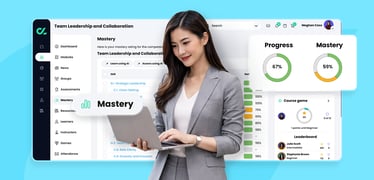
The limits of certification-led partner enablement For years, partner readiness has been built around certifications. Complete the course. Pass the test. Earn the badge. Move on. On paper, it works. C...


How AI is changing partner enablement—from creation to in-the-moment support
Partner enablement has always been a high-stakes balancing act. Organizations must equip distributed partners with the right knowledge, at the right time, in the right format—while keeping content acc...

Why one-size-fits-all partner training no longer works
Partner ecosystems have changed. What once worked as a standardized onboarding program or a single certification track is no longer enough to support the complexity of modern extended enterprise envir...
Managing partner compliance without becoming the bottleneck
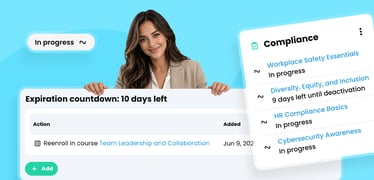
Compliance is non-negotiable in partner ecosystems. Whether it’s regulatory requirements, product certifications, or operational standards, organizations must ensure that partners meet defined criteri...

What’s the hidden cost of manual partner enablement—and how can automation solve it?
Partner ecosystems promise scale. Resellers, distributors, service partners, and franchise networks extend reach into markets that internal teams cannot cover alone. But enabling those partners effect...

Centralized strategy, decentralized execution: The partner training operating model
Partner ecosystems rarely succeed with purely centralized control or complete decentralization. Global strategy demands consistency—brand messaging, certification standards, and product positioning. Y...

How to scale partner training globally without losing brand or control
Global partner ecosystems are expanding faster than ever. Whether you support resellers, distributors, franchisees, or service partners, your training program must scale across regions, languages, and...

Partner training in the age of speed: how to keep enablement aligned with product change
The speed problem in modern partner ecosystems Product cycles have compressed. Feature releases happen monthly—or weekly. Integrations evolve. Pricing shifts. Messaging pivots. And partners are expect...

The shift from static partner certification to continuous partner readiness
For years, partner certification followed a predictable model: complete onboarding, pass an assessment, earn a badge. Certification achieved. Box checked. But modern partner ecosystems move faster tha...

Why most partner LMS platforms fail (and what high-performing programs do differently)
Partner LMS platforms promise scale: a centralized environment where partners can get enabled, certified, updated, and supported. In reality, many become static repositories—visited during onboarding,...

From enablement to ecosystem: Rethinking partner training for modern GTM teams
For years, partner training has lived under the banner of “enablement.” It was often treated as a function: build onboarding courses, assign certifications, track completions, repeat. But modern Go-To...

How do channel and partner teams turn training data into business intelligence?
Channel and partner leaders don’t need more training reports. They need clearer answers. Across extended enterprise ecosystems, LMS platforms generate significant data—enrollments, completions, certif...