



Customer training has quietly become one of the most powerful levers for growth. The fastest-growing companies no longer see training as a post-sale add-on—they treat it as a strategic function that drives retention, expansion, and advocacy.
But not all customer training programs are created equal. Many still rely on old, out-of-date courses, generic onboarding, and surface-level metrics like completions. High-growth companies take a fundamentally different approach. They design training systems that scale effortlessly, adapt to individual learners, and deliver measurable business outcomes. Source: CYPHER Learning; Source: Thought Industries
Here’s what they get right—and what others can learn from them.
They design for scale from day one
One of the biggest mistakes companies make is building customer training programs that work for 100 users—but break at 1,000.
High-growth organizations assume scale from the start. They don’t rely on manual processes or instructor-led bottlenecks. Instead, they build systems that can support thousands (or millions) of learners without increasing operational overhead.
This means:
- Automating enrollment, notifications, and progression.
- Using reusable course templates and learning paths.
- Supporting multiple audiences (customers, partners, regions) in one platform.
- Enabling self-service access through catalogs and portals.
Modern platforms make this possible by combining automation with flexible architecture. For example, automation rules can trigger actions like enrollment, messaging, or certification based on learner behavior—removing the need for manual intervention. At the same time, multi-organization structures allow companies to manage different customer segments or regions with tailored experiences while maintaining centralized control. Source: CYPHER Learning
The result is a system that grows with the business, not against it.
They prioritize personalization over standardization
Traditional training treats all learners the same. High-growth companies know that’s a losing strategy.
Customers vary widely in role, experience, goals, and readiness. A one-size-fits-all program creates friction, slows adoption, and reduces engagement.
Instead, leading organizations embrace personalization at scale.
They do this by:
- Creating role-based learning paths (e.g., admin vs. end user).
- Using adaptive learning to show or hide content based on performance.
- Delivering content in multiple formats (self-paced, microlearning, blended).
- Leveraging AI to recommend next steps or generate tailored content.
Personalization is powered by data and automation. For instance, learning platforms can dynamically adjust content visibility based on user attributes like role, organization, or progress—ensuring each learner sees only what’s relevant to them. Source: CYPHER Learning
Even more powerful is competency-based learning. By mapping content and assessments to specific skills, organizations can track mastery and guide learners toward targeted development paths. This shifts training from “content consumption” to “capability building.”
In high-growth companies, personalization isn’t a feature—it’s the foundation.
They treat insight as a strategic capability—not a report
Many organizations measure training success using basic metrics: enrollments, completions, and course ratings.
High-growth companies go much deeper.
They treat data as a core capability that informs decisions across product, customer success, and revenue teams.
This includes tracking:
- Skill mastery and competency progression.
- Time to proficiency.
- Engagement patterns and drop-off points.
- Correlations between training and business outcomes (e.g., retention, upsell).
Modern platforms support this with robust reporting and dashboards. Organizations can generate custom reports, track course completion trends, and analyze learner performance across multiple dimensions such as organization, role, or timeframe. Advanced analytics also enable visualization of trends and performance metrics, helping teams identify gaps and opportunities in real time.
The key difference is how this data is used.
Instead of simply reporting on what happened, high-growth companies use data to:
- Identify where customers struggle.
- Optimize onboarding flows.
- Personalize recommendations.
- Proactively intervene before churn.
In other words, data becomes a growth engine—not just a dashboard.
They connect training to the full customer lifecycle
Customer training doesn’t stop at onboarding—and high-growth companies know it.
They design education as a continuous journey that evolves alongside the customer relationship.
This typically includes:
- Onboarding: helping customers achieve first value quickly.
- Adoption: deepening usage of key features.
- Expansion: introducing advanced capabilities and use cases.
- Advocacy: enabling customers to become champions and experts.
Learning paths play a critical role here. By structuring content into progressive journeys, companies can guide customers from foundational knowledge to advanced mastery in a logical, scalable way. These paths can even adapt dynamically by routing learners to different content based on performance or role.
Automation ensures that customers move through this lifecycle seamlessly, with timely nudges, reminders, and recommendations.
The result is not just trained customers, but empowered, engaged users who drive long-term growth.
They embed learning into the flow of work
One of the most important shifts in customer training is where learning happens.
High-growth companies don’t expect customers to leave their workflow to complete training. Instead, they bring learning directly into the flow of work.
This includes:
- Just-in-time learning resources.
- Embedded help and contextual guidance.
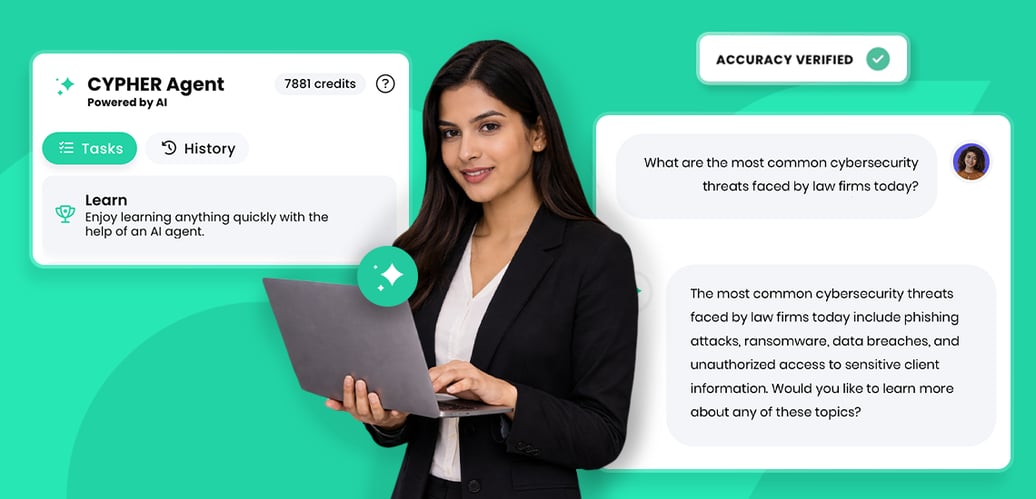
- AI-powered assistants that answer questions in real time.
- Microlearning that fits into daily tasks.
AI is accelerating this trend. With conversational interfaces and contextual awareness, learners can access relevant knowledge instantly—without navigating through courses or documentation. Source: Idea Crossing
This reduces friction, increases adoption, and ensures that training is not a one-time event, but an ongoing support system.
They align training with measurable business outcomes
Ultimately, what sets high-growth companies apart is their focus on outcomes.
They don’t invest in customer training because it’s “nice to have.” They invest because it drives measurable impact.
They tie training to metrics such as:
- Customer retention and churn reduction.
- Product adoption and feature usage.
- Time-to-value.
- Expansion revenue.
- Customer satisfaction and advocacy.
This alignment requires close collaboration between enablement, customer success, and product teams. It also requires a platform that can connect learning data with broader business metrics.
When done right, customer training becomes a strategic asset, one that directly contributes to growth.
The future of customer training is intelligent, scalable, and measurable
The gap between average and high-growth companies is widening—and customer training is a big part of that divide.
The leaders are building systems that:
- Scale without increasing cost.
- Personalize experiences for every learner.
- Deliver actionable insights through analytics.
They are moving beyond courses and completions toward intelligent learning ecosystems that adapt, optimize, and drive outcomes.
For organizations looking to compete, the message is clear: customer training is no longer a support function. It’s a growth strategy.
Ready to transform your customer training?
CYPHER Learning helps organizations build scalable, personalized, and data-driven customer training programs—all in one AI-powered platform. From automation and adaptive learning to robust reporting and skills tracking, CYPHER enables you to deliver impactful learning experiences that drive real business results.
Discover how CYPHER Learning can power your customer training strategy.
References
- Source: CYPHER Learning - https://www.cypherlearning.com/solutions/customer-training
- Source: Thought Industries - https://www.thoughtindustries.com/blog/customer-education-best-practices/
- Source: CYPHER Learning - https://www.cypherlearning.com/blog/business/how-to-use-lms-platforms-to-scale-customer-training-programs
- Source: CYPHER Learning - https://www.cypherlearning.com/tour/automation
- Source: Idea Crossing - https://www.ideacrossing.org/the-future-of-customer-training-ai-personalization-and-digital-adoption/


