



The limits of certification-led partner enablement
For years, partner readiness has been built around certifications. Complete the course. Pass the test. Earn the badge. Move on.
On paper, it works. Certifications provide structure, standardization, and a clear signal of completion. But in practice, they often fail to answer the most important question: can your partners actually do the job?
A partner may be certified on your platform—but can they position a new feature in a competitive deal? Can they configure it correctly? Can they troubleshoot issues in a live customer environment?
Certifications measure completion but they don’t always measure capability. And an unprepared partner means loss of reputation, time, and revenue.
As product cycles accelerate and partner roles become more specialized, this gap becomes more visible—and more costly. Organizations are starting to realize that partner readiness is not about what someone has completed, but what they can consistently execute. Source: CYPHER Learning; Source: eLearning Industry
That shift requires moving from certification-based models to skills-based enablement.
Why skills—not courses—should define readiness
In a skills-based model, readiness is defined by demonstrated capability, not course completion. Instead of asking, “Did the partner finish the training?” you ask, “Can the partner perform the task?”
This reframes enablement around outcomes.
A modern partner readiness model focuses on:
- The specific skills required for each role (sales, pre-sales, implementation, support).
- The level of proficiency needed (basic, intermediate, advanced).
- The ability to apply knowledge in real-world scenarios.
This approach aligns far more closely with how partners operate. They don’t sell or implement products in modules—they do it in dynamic, customer-facing situations. Source: CYPHER Learning
When enablement is mapped to skills, it becomes:
- More relevant to partner roles.
- Easier to update when products change.
- More measurable in terms of business impact.
And most importantly, it builds confidence—both for the partner and for your organization.
Building a foundation with skills mapping
The first step in moving to a skills-based model is defining what “good” looks like.
Skills mapping allows you to break down partner readiness into clear, structured capabilities. Instead of designing courses first, you define the skills partners need to succeed. Source: eLearning Industry
For example, a partner sales role might require:
- Positioning product value in specific industries.
- Handling competitive objections.
- Identifying upsell opportunities.
An implementation partner might require:
- Configuring key product features.
- Integrating with third-party systems.
- Troubleshooting common issues.
With CYPHER Learning, skills can be mapped directly to courses, modules, and assessments, creating a structured relationship between learning content and real-world capability.
This mapping ensures that every piece of training serves a clear purpose: building a specific skill tied to partner performance.
It also makes enablement scalable. When a new feature is introduced, you don’t need to rebuild entire courses—you update or add the relevant skills and align content accordingly.
Tracking real capability with mastery
Once skills are defined, the next challenge is measuring them.
This is where mastery tracking becomes essential.
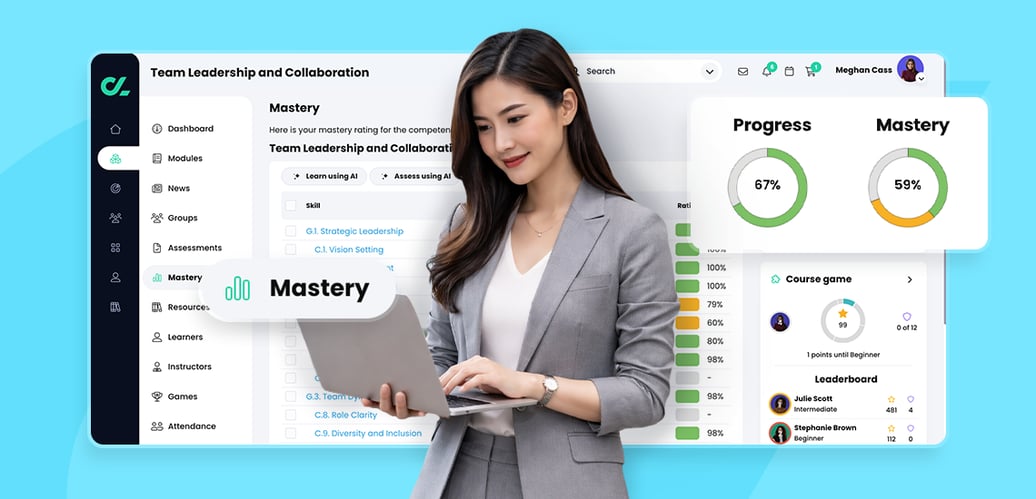
Rather than assigning a binary “pass/fail” status, mastery tracking evaluates how well a partner understands and applies a skill over time. It uses data from assessments, activities, and performance to build a more accurate picture of capability.
In CYPHER, competencies can be associated with both learning content and assessments, allowing you to track learner progress across each defined skill area.
This creates a dynamic view of partner readiness:
- Which skills are fully mastered.
- Which are still developing.
- Where gaps exist.
Instead of a static certification, you get a living profile of partner capability.
This matters because partner readiness is not a one-time achievement. As products evolve, skills must evolve too. Mastery tracking allows you to continuously assess and update readiness in line with real-world demands. Source: CYPHER Learning
Making insights actionable with competency dashboards
Data is only valuable if it leads to action.
Competency dashboards bring skills and mastery data together into a clear, visual view of partner readiness across individuals, teams, and regions.
With the CYPHER platform’s mastery and competency tools, organizations can view how well training covers required competencies and how learners are progressing against them.
This enables several high-impact use cases:
- Identify skill gaps at scale: See which competencies are consistently underperforming across your partner network.
- Target enablement efforts: Focus training updates on the skills that matter most for business outcomes.
- Support partner managers: Give them visibility into the readiness of their partners without manual reporting.
- Align with revenue goals: Correlate skill mastery with deal performance and customer success.
Instead of guessing where enablement is falling short, you can pinpoint exactly where improvement is needed—and act quickly.
Moving from static programs to adaptive readiness
One of the biggest advantages of a skills-based model is adaptability.
In traditional certification programs, updating training often means revising entire courses, reissuing certifications, and asking partners to repeat large portions of content. Source: Forbes
In a skills-based model, you can:
- Update a specific skill when a feature changes.
- Adjust assessments tied to that skill.
- Recalculate mastery levels automatically.
- Notify only the partners affected.
This creates a far more efficient and partner-friendly experience.
It also aligns enablement with how work actually happens. Partners don’t relearn everything when a product changes—they adapt specific parts of their knowledge.
Your training model should reflect that reality.
Creating a better partner experience
Beyond operational efficiency, a skills-based approach significantly improves the partner experience.
Partners don’t want to spend hours completing training that isn’t relevant to their role. They want:
- Clear guidance on what skills they need.
- Training that directly supports their work.
- Visibility into their progress.
- Recognition for real capability—not just completion.
By focusing on skills, you provide a more personalized and meaningful learning journey.
Partners can see:
- What they’ve mastered.
- What they need to improve.
- How they compare to expectations.
This transparency builds trust and engagement.
And when partners feel confident in their ability to deliver, they are more likely to sell, implement, and support your product effectively.
Redefining partner readiness for the modern ecosystem
The shift from certifications to skills is not just a learning strategy—it’s a business strategy.
As ecosystems become more complex and competitive, partner performance becomes a key differentiator. Organizations that can accurately assess and develop partner capability will outperform those that rely on outdated metrics like course completion.
A smarter model for partner readiness is:
- Skills-driven: Focused on real-world capability.
- Continuously measured: Using mastery tracking instead of static certifications.
- Data-informed: Powered by competency dashboards and insights.
- Adaptable: Able to evolve alongside product and market changes.
This approach doesn’t eliminate certifications—it makes them more meaningful. Certifications become milestones within a broader, ongoing journey of skill development. Source: CYPHER Learning
In the end, the goal is not to certify partners, but to enable them to succeed.
Ready to move beyond certifications?
CYPHER Learning helps organizations build smarter partner enablement programs with built-in skills mapping, mastery tracking, and competency dashboards.
Empower your partners with the capabilities they need—not just credentials—and gain real visibility into readiness across your ecosystem.
Download brochure: Why training partners with CYPHER is the right choice
References
-
Source: CYPHER Learning - https://www.cypherlearning.com/solutions/partner-enablement
-
Source: eLearning Industry - https://elearningindustry.com/how-to-leverage-your-elearning-courses-in-a-certification-program
-
Source: eLearning Industry - https://elearningindustry.com/ai-driven-personalization-in-corporate-training-what-works-and-how-to-scale-it
-
Source: CYPHER Learning - https://www.cypherlearning.com/blog/business/skills-based-learning-for-partners-and-customers-why-outcomes-matter-more-than-content
-
Source: CYPHER Learning - https://www.cypherlearning.com/solutions/skills-development
-
Source: Forbes - https://www.forbes.com/councils/forbeshumanresourcescouncil/2025/05/14/skills-based-talent-models-require-the-right-organizational-structure/
-
Source: CYPHER Learning - https://www.cypherlearning.com/tour/skills-development


