




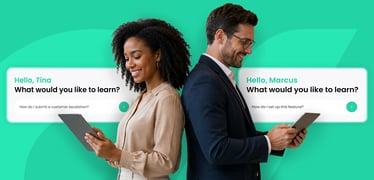
Organizations often treat employee and customer training as two separate worlds. Employees need onboarding, product knowledge, process training, and continuous development. Customers need implementati...
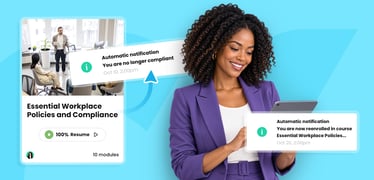
Key factors in choosing AI compliance training tools
Picking the right AI compliance training tools can determine whether your global workforce actually absorbs regulatory content or clicks through it on autopilot. CYPHER Learning gives you AI-powered c...

Best AI course platforms with built-in delivery
Most AI course creation software still forces you to piece together a content authoring tool, a separate LMS, a payment gateway, and a reporting dashboard. For training businesses, that patchwork adds...
AI you can trust: why accuracy and transparency matter in learning
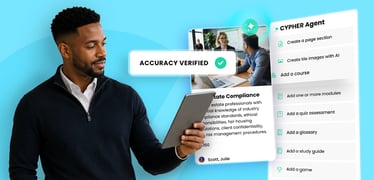
AI can answer a question in seconds. In learning, that speed is compelling. A partner preparing for a customer conversation can ask about a product. A reseller can explore an unfamiliar use case. A di...

From static content to living knowledge
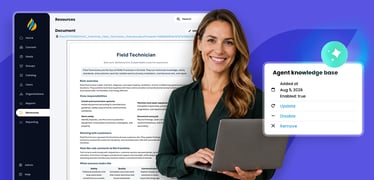
Franchised businesses depend on knowledge being repeatable. A customer should encounter the same standards whether they walk into the original location or the hundredth. A new franchisee needs to unde...
Best AI compliance course builders compared in 2026
Workplace regulations change faster than most L&D teams can build training for them. Every new data privacy rule, updated safety standard, or revised industry regulation means another round of course ...
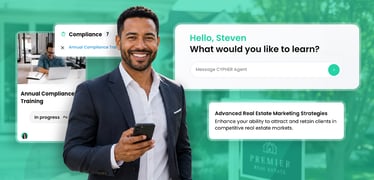
Why the future of learning is personal, persistent, and proactive
Real estate has always been a business where knowledge matters, but knowledge alone is rarely enough. An agent needs to understand the market, processes, regulations, technology, negotiation, customer...
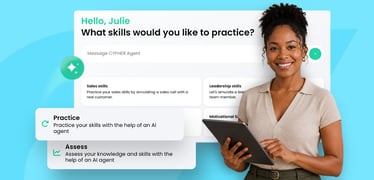
How skills, courses, practice, and assessment finally connect
For years, learning technology has been very good at organizing learning activities. Courses lived in one place. Assessments appeared at predetermined points. Skills frameworks often sat alongside the...

Learning in the flow of work is no longer a buzzword
For years, “learning in the flow of work” has been one of those ideas that everyone in L&D could agree with, but few organizations could fully deliver. The premise was compelling: instead of asking pe...
Bright MLS is turning AI readiness into a real estate advantage with CYPHER
AI is rapidly changing the way real estate professionals work. But access to AI tools alone does not create an AI ready workforce. Professionals also need the knowledge, confidence and practical skill...
The end of searching, the beginning of asking
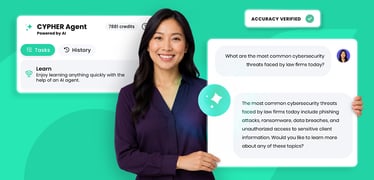
For decades, learning has inherited an assumption from the web: if people need to know something, they should search for it. Type the right keywords. Scan the results. Open a resource. Decide whether ...
How CYPHER Agent turns curiosity into capability
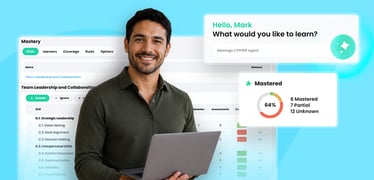
The best learners have always been curious. They ask questions, seek better ways of working, and look for opportunities to improve. The challenge for organizations has never been encouraging curiosity...
The shift from assigned learning to self-directed growth
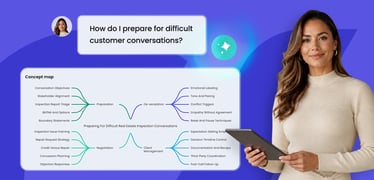
For years, workplace learning followed a familiar pattern. Someone assigned a course, learners completed it, and the organization recorded another completion. While this approach remains essential for...
Why the LMS dashboard is no longer the center of learning
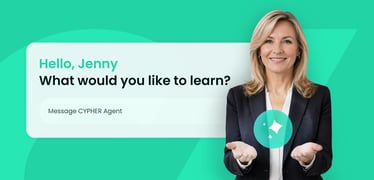
For years, the LMS dashboard has been the front door to workplace learning. Users logged in, browsed course catalogs, checked assignments, completed training, and tracked progress. It was the place wh...
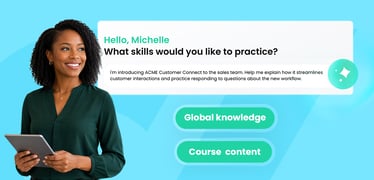
Learning that knows you: the power of contextual AI
Artificial intelligence has made learning faster, more accessible, and more interactive. Yet one challenge remains. AI is only as useful as the context it understands. Ask a general AI model how to ha...