




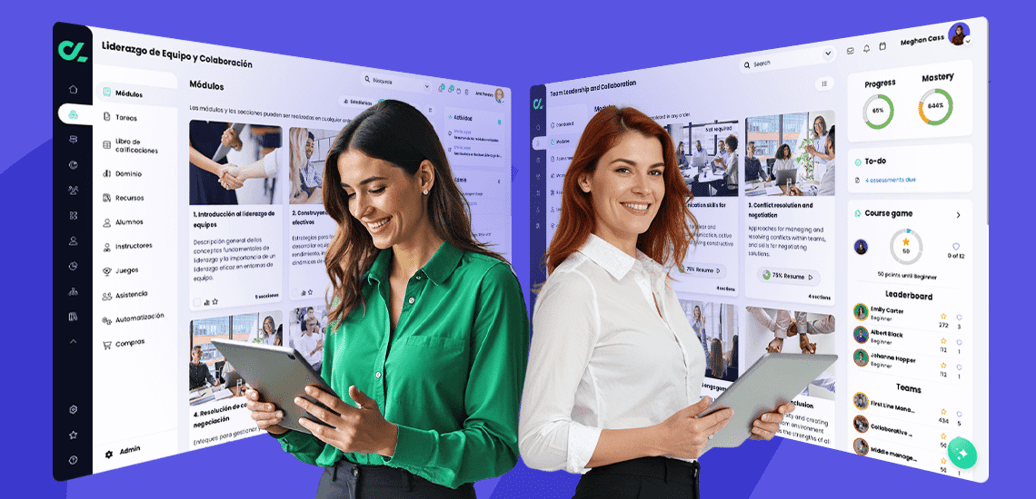
Delivering a localized training experience is crucial for organizations operating across global markets. The right Learning Management System (LMS) enables seamless training delivery in multiple languages while addressing cultural differences, ensuring engagement and compliance worldwide. This article explores best practices for multinational training, compares leading LMS platforms—including CYPHER Learning, Litmos, Docebo, and Absorb LMS—and explains why localized support is essential for modern enterprises.
What makes an LMS effective for multinational training?
An effective multilingual LMS must support diverse user groups by combining language versatility with cultural sensitivity. Core features to look for include:
- Automated multi-lingual content creation: Can create content in multiple languages to localize training materials efficiently.
- Cultural adaptation: Adjusting content to reflect regional customs, communication styles, and learning preferences.
- Localized UI: Multilingual user interface based on the preferences of the user.
- Personalized learning paths: Customizing courses based on individual language preferences, skill levels, and user roles.
- Compliance tracking: Monitoring training adherence in line with local regulatory requirements.
- Mobile accessibility: Enabling learners to access courses seamlessly on smartphones, tablets, and desktops, catering to different regions and work environments.
These capabilities help organizations deliver relevant, engaging, and compliant global training programs at scale.
CYPHER Learning: leading the way in global LMS solutions
CYPHER Learning stands out as a pioneering LMS designed to close global workforce gaps with advanced multilingual support and cultural intelligence. Its notable features include:
- Modular design: Allows tailored customization to meet specific linguistic and cultural training needs.
- AI-powered adaptive learning: Offers personalized content based on regional learning habits and preferences.
- Automated compliance tracking: Ensures regulatory standards are consistently met worldwide.
- Mobile-first interfaces and advanced analytics: Facilitate easy access for learners and detailed monitoring of progress and engagement.
- Cultural localization: Adjusts tone, examples, idioms, and visual elements to ensure regional relevance and learner resonance in AI-generated content.
Additionally, CYPHER Learning seamlessly integrates with enterprise systems such as HRIS and CRM, streamlining global training administration (CYPHER Learning, 2025c).
Overview of top global LMS platforms and their strengths
Here is a comparison highlighting the global capabilities and unique benefits of leading LMS platforms.
Litmos
Litmos supports over 30 languages with a focus on ease of use and AI-driven course management tools. Key features include:
- AI assistants to facilitate course creation and administration.
- Machine learning-enabled video assessments for interactive evaluation.
- Gamification elements and personalized learning paths.
- Robust reporting and analytics capabilities.
However, Litmos may require additional third-party tools for extensive customization, and customer support can be inconsistent (Docebo, 2025).
Docebo
Docebo caters to large enterprises needing scalable, highly customizable LMS solutions. Primary features are:
- Automated content management with advanced localization.
- AI-driven personalization to tailor learning experiences.
- User segmentation and multi-audience portals for diverse groups.
Its complexity may pose challenges for organizations with simpler training requirements (D2L, 2025).
Absorb LMS
Focused on compliance training with straightforward deployment, Absorb LMS offers:
- Built-in multilingual access.
- Automation features to simplify setup.
- Clean, intuitive user interface suited to compliance needs.
Limitations include fewer customization options and less support for personalized branding (D2L, 2025).
CYPHER Learning (feature overview)
CYPHER Learning excels through cultural intelligence that extends beyond language support:
- AI localization engine that updates translations automatically in real time.
- Instructional tone, examples, and visuals reflective of the region chosen.
- A universal translator auto translates forums, blogs, and chats in real time to facilitate collaboration across regions.
- Seamless integration with complex enterprise software ecosystems.
This comprehensive approach guarantees consistent, culturally relevant training on a large scale (CYPHER Learning, 2025).
Why is multilingual support critical in modern LMS platforms?
Multilingual support is more than translating text—it ensures learning resonates across cultures, enhancing engagement and effectiveness. Key reasons include:
- Removing language barriers: Facilitates understanding for non-native speakers.
- Addressing cultural nuances: Recognizes that cultural context shapes learning behaviors.
- Promoting inclusion: Builds a global community by respecting diversity.
- Enhancing learner retention: Localized content improves motivation and knowledge absorption.
Modern LMS platforms leverage automatic translations combined with locale-specific theming to increase relevance and learner satisfaction (Docebo, 2025).
Comparing global LMS platforms: user insights
|
Platform |
Pros |
Cons |
|
CYPHER Learning |
|
|
|
Litmos |
|
|
|
Docebo |
|
|
|
Absorb LMS |
|
|
How AI automates localization in LMS
Artificial Intelligence enhances multilingual training by automating many localization tasks:
- Utilizing natural language processing (NLP) for immediate, accurate translation of content.
- Facilitating rapid course creation across multiple languages without duplicative effort.
- Automatically updating translations when core materials are modified, maintaining consistency.
- Reducing human translation errors, lowering costs, and accelerating deployment globally.
These AI capabilities create scalable, cost-effective multilingual training ecosystems (CYPHER Learning, 2025b)
Beyond language: tackling cultural differences in global training
Effective global training requires adapting to cultural contexts beyond translation. This includes:
- Modifying case studies and scenarios to reflect local realities and practices.
- Adjusting humor, idioms, and expressions to suit regional sensibilities.
- Choosing culturally appropriate colors, images, and design elements.
- Aligning assessment methods with local expectations and standards.
The CYPHER Learning platform's course creation AI Agent specializes in these adaptations and enables learner engagement tracking by region for optimized training outcomes (CYPHER Learning, 2025).
Essential features for global training LMS
- Automated language localization: AI-powered translation combined with contextual content adaptation to ensure accuracy and relevance.
- Personalized learning paths: Machine learning-driven course suggestions tailored to language, skill level, and user role.
- Certification and compliance tracking: Robust monitoring that aligns with regional regulatory requirements and updates proactively.
- Mobile learning access: Responsive design enabling seamless course access on smartphones, tablets, and desktops globally.
- Administrative ease: Streamlined workflows including native integrations with enterprise systems and flexible, insightful reporting tools.
Together, these features enable organizations to deliver compliant, engaging, and effective global training programs.
Conclusion: choosing the right LMS for multilingual training success
Successful multilingual training is indispensable for global organizations. Leading LMS solutions such as CYPHER Learning, Litmos, Docebo, and Absorb LMS provide powerful capabilities that combine automated translation, cultural localization, seamless integration, and scalable technology.
Selecting an LMS committed to both language accuracy and cultural relevance transforms communication challenges into opportunities for engagement and understanding. CYPHER Learning exemplifies this approach by delivering deeply localized and user-centric training experiences that set the industry standard.
Sources and references
- (Docebo, 2025) - https://www.docebo.com/learning-network/blog/multi-language-lms/
- (D2L, 2025) - https://www.d2l.com/blog/lms-compliance-training/
- (CYPHER Learning, 2025) - https://www.cypherlearning.com/ai-360/cypher-agent-for-course-creators
- (CYPHER Learning, 2025b) - https://www.cypherlearning.com/lms
- (CYPHER Learning, 2025c) - https://www.cypherlearning.com/tour/integrations


