



Successfully training hybrid teams at scale requires a sophisticated digital infrastructure. A robust Learning Management System (LMS) bridges geographic divides, supports diverse learning styles, and automates complex training processes. As organizations adopt remote and flexible work models, an LMS becomes essential for delivering scalable, effective training across departments.
Why hybrid teams require advanced LMS solutions
Hybrid teams combine in-person and remote participation, enabling real-time interaction without location constraints. Businesses with 500–1000 employees spread over multiple locations face varied training needs by role and geography. They must ensure consistent learning experiences and accountability across the organization (CYPHER Learning Blog, LMS for Hybrid Orgs, 2025).
Modern LMS platforms centralize content, delivery, and analytics into a single source of truth. This avoids fragmented systems, eliminates duplicated material, and enables standardized reporting. Learning and Development (L&D) teams can thereby scale initiatives efficiently across departments and sites (D2L, Hybrid vs Blended Learning, 2025).
Core features that enable scalable hybrid training
1. AI-powered course creation and personalization
AI tools within LMS platforms rapidly transform documents and media into branded, skills-aligned courses. Features like integrated assessments, gamification, and adaptive content personalize learning paths. This personalization improves engagement and knowledge retention while lowering administrative effort (CYPHER Learning Blog, LMS for Hybrid Orgs, 2025).
2. Enterprise-grade integrations
A scalable LMS connects seamlessly with HR systems, collaboration tools (e.g., Microsoft Teams, Google Workspace), and external content providers (like Coursera or Udemy). These integrations automate enrollment, progress tracking, and data sharing, streamlining administration for dispersed hybrid workforces (CYPHER Learning Blog, LMS for Hybrid Orgs, 2025).
3. Analytics and reporting dashboards
Comprehensive dashboards provide insights on skills gaps, course completion, and user engagement. L&D teams gain real-time visibility into learner behavior, enabling continuous program refinement to impact key organizational KPIs such as productivity and satisfaction (CYPHER Learning Blog, LMS for Hybrid Orgs, 2025).
4. Flexible learning experiences
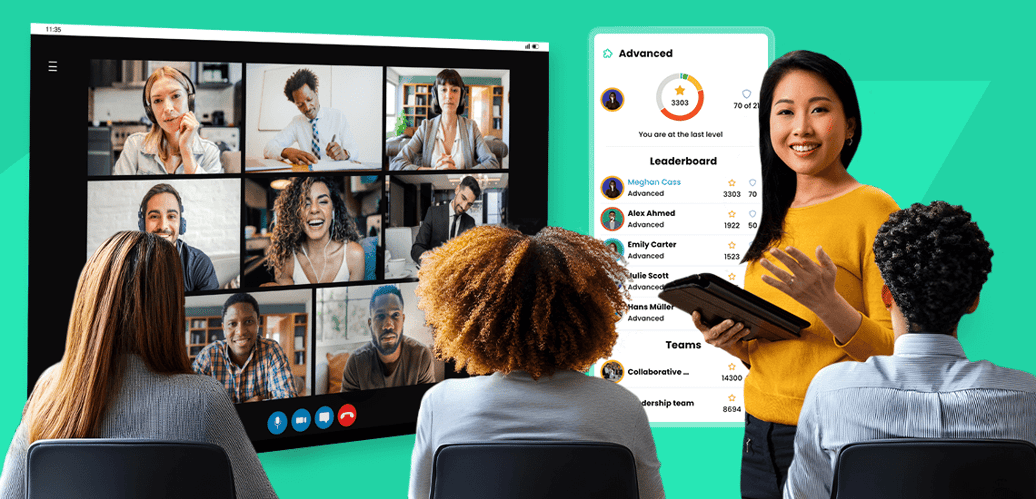
Advanced LMSs support both synchronous (live virtual sessions), asynchronous learning (self-paced modules), and blended courses (live sessions mixed with self-paced). Hybrid teams benefit from discussion forums, mobile accessibility, gamification, and multimedia content. Adaptive learning paths ensure training relevance for all employees (CYPHER Learning Blog, LMS for Hybrid Orgs, 2025).
Best practices to maximize hybrid learning success
Continuous personalization through AI
Leveraging AI-based recommendations, organizations build personalized learning journeys. Content adapts dynamically to employee roles, skill levels, and performance metrics, ensuring training aligns with evolving business priorities (CYPHER Learning Blog, The Digital Learning Revolution, 2025).
Automated administration and feedback loops
Automation handles routine tasks such as enrollment, progress updates, and assessments, freeing L&D teams to focus on strategy. Built-in feedback mechanisms allow iterative course improvements based on both quantitative data and qualitative learner input (CYPHER Learning Blog, The Digital Learning Revolution, 2025).
Engaging social learning environments
Gamified modules and interactive forums foster team connection despite physical separation. Discussion boards and live coaching enhance learning outcomes and encourage peer knowledge sharing (CYPHER Learning Blog, The Digital Learning Revolution, 2025).
Mobile-first design for workforce flexibility
Mobile-friendly platforms and content let employees engage on-the-go. Features like push notifications and mobile assessments maintain participation and keep learners on track regardless of location or schedule (CYPHER Learning Blog, The Digital Learning Revolution, 2025).
Data-driven continuous improvement
Regular analysis of training metrics, including engagement and assessment results, helps identify gaps. L&D teams use these insights to quickly refine content and delivery strategies, directly connecting learning programs to business success (CYPHER Learning Blog, The Digital Learning Revolution, 2025).
The future of hybrid training: scalable, personalized, and effective
Leading LMS providers such as CYPHER Learning equip organizations with AI-driven automation, seamless integrations, rich analytics, and flexible delivery options. These capabilities empower L&D teams to cultivate resilient learning cultures. Every employee receives engaging, relevant training that supports both individual growth and organizational objectives (CYPHER Learning Blog, LMS for Hybrid Orgs, 2025); (CYPHER Learning Blog, The Digital Learning Revolution, 2025).
As digital learning evolves, the LMS transforms from a simple toolset to the core engine driving workforce transformation and organizational growth.
References
- (CYPHER Learning Blog, LMS for hybrid orgs with 500–1000 staff, 2025) - https://www.cypherlearning.com/blog/business/lms-for-hybrid-orgs-with-500-1000-staff-cypher-learning
- (CYPHER Learning Blog, The digital learning revolution: How orgs are reinventing training, 2025) - https://www.cypherlearning.com/blog/business/the-digital-learning-revolution-how-orgs-are-reinventing-training
- (D2L, Hybrid learning vs blended learning for Enterprise L&D, 2025) - https://www.d2l.com/blog/hybrid-learning-vs-blended-learning/


