



In today’s competitive business world, companies must constantly invest in employee development to maintain an edge and achieve results. Learning Management Systems (LMS) have transformed how businesses train and evaluate their workforce. The key advantage of an LMS lies in its ability to collect extensive data on learning behaviors. This data turns training activities into actionable insights, directly improving employee performance and business outcomes.
Understanding LMS reporting: the foundation of data-driven performance management
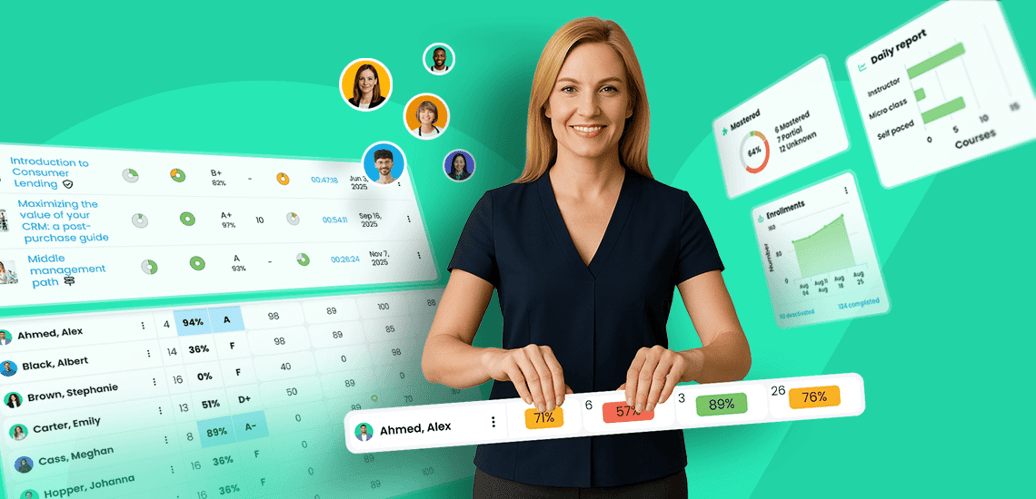
LMS reporting is fundamental to modern talent development. These systems automatically gather data whenever employees engage with training content. This data covers progress through modules, assessment results, engagement frequency, and time spent on learning tasks.
Typical metrics tracked include:
- Course completion rates: Tracks the percentage of employees finishing their training modules.
- Assessment scores: Measures knowledge retention and skill mastery.
- Engagement levels: Tracks active participation and time spent on course activities.
- Skill gap analysis: Identifies training needs aligned with company goals (TalentLMS, Employee Performance Metrics, 2025).
Managers use these insights to offer timely feedback, customize learning paths, and intervene where performance improvement is necessary.
From reporting to real-time optimization
The strength of LMS data lies in converting raw information into actionable strategies. Modern LMS platforms offer intuitive dashboards and customizable reports. These tools allow administrators to analyze data by department, role, or location, helping identify hidden issues or success patterns.
Examples of data-driven actions include:
- Adjusting course content based on low completion or engagement rates.
- Introducing gamification or interactive features to boost participation.
- Linking learner engagement directly to key business metrics such as productivity or customer satisfaction.
- Updating training materials regularly to maintain relevance for different employee groups.
Continuous performance improvement through targeted training
LMS reporting enables personalized training plans that address specific skill gaps and future workforce needs. Instead of generic programs, companies can create customized learning journeys. This approach improves knowledge retention, enhances skills, and drives measurable productivity gains (eLearning Industry, Boosting Employee Performance, 2025).
Organizations using LMS data effectively foster a culture of continuous learning where:
- Employees receive clear, actionable feedback.
- Engagement and motivation increase.
- Workforce adaptability improves in response to new roles or technologies (eLearning Industry, Boosting Employee Performance, 2025).
CYPHER Learning: a leader in data-driven workforce development
CYPHER Learning provides an AI-powered LMS platform designed to convert learning data into strategic talent development insights. Its features include real-time progress tracking, skills and mastery reports, and time tracking, which provides continuous visibility into employee skill development and engagement levels. The platform also integrates smoothly with HR systems, ensuring that learning is closely aligned with overall talent management strategies.
For organizations aiming not just to measure but improve employee performance, leveraging LMS data with a platform like CYPHER Learning raises the standard for workforce development.
References
- (TalentLMS, Employee Performance Metrics: Tips for Your Learning & Development Program, 2025) - https://www.talentlms.com/blog/employee-performance-metrics/
- (eLearning Industry, Boosting Employee Performance Through Targeted LMS Training, 2025) - https://elearningindustry.com/boosting-employee-performance-through-targeted-lms-training


