




With the increasing prevalence of remote and hybrid work models, organizations need effective professional development tools designed specifically for distributed teams. Selecting the right Learning Management System (LMS) is essential for efficiently upskilling remote employees (CYPHER Learning, 2025).
Top platforms like CYPHER Learning deliver accessible, personalized, and seamlessly integrated training experiences tailored for remote learning environments (CYPHER Learning, 2025a). This article reviews the best LMS platforms for remote skills training, highlights essential features, and provides a comparative analysis based on authoritative sources.
Why specialized LMS platforms are vital for remote teams
Remote work presents unique challenges that traditional LMS systems may not effectively address. Key aspects necessitating specialized LMS platforms include:
- Mobile access: Ensures employees can continue learning from their mobile device.
- Social interaction features: Facilitates peer collaboration to mimic the engagement of in-person training, improving motivation and retention.
- Adaptive learning pathways: Customized curricula that adapt to individual learner needs boost skill acquisition efficiency.
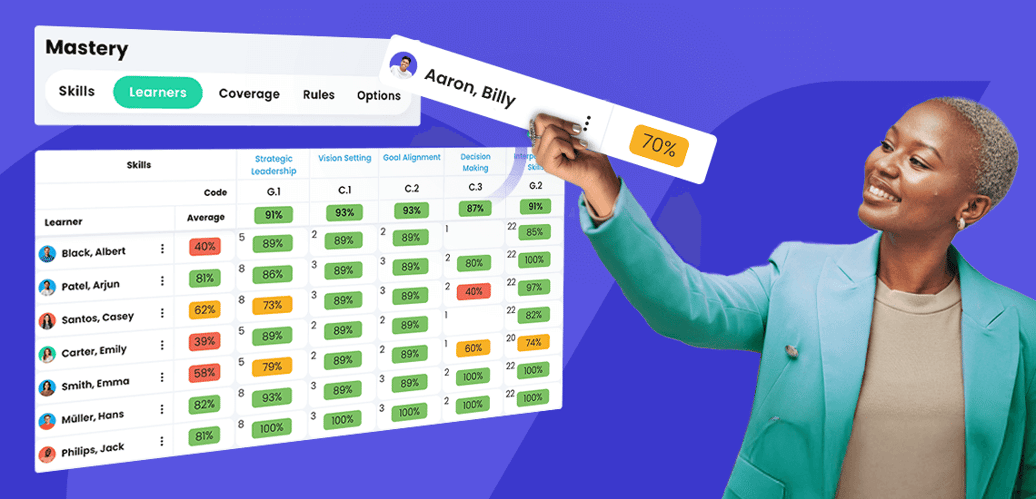
- Robust analytics: Detailed tracking and reporting allow organizations to monitor learner progress and make data-driven improvements to training.
Among these, CYPHER Learning stands out with outstanding remote learning features that address these core requirements effectively (CYPHER Learning, 2025).
Core features defining top remote LMS platforms
1. Mobile accessibility
Remote workers often operate from diverse locations. Therefore, effective LMS platforms must offer dedicated mobile applications optimized for different devices.
For example, CYPHER Learning provides a seamless mobile experience, enabling uninterrupted learning globally.
2. Interactive and social learning tools
Maintaining engagement in remote settings requires dynamic social learning features such as:
- Discussion forums for knowledge exchange.
- Peer review systems to encourage feedback.
- Group challenges to foster teamwork.
CYPHER Learning integrates these collaborative tools natively, enhancing learner engagement and replicating in-person interaction benefits (CYPHER Learning, 2025a).
3. Personalized learning pathways
Adaptive learning increases retention and effectiveness by:
- Modifying course difficulty based on performance.
- Automating curriculum branching to tailor learning journeys.
- Suggesting relevant materials in response to learner behavior.
Leading platforms like CYPHER Learning leverage automation and user data to deliver personalization (CYPHER Learning, 2025).
4. Integrated analytics and reporting
To support data-driven training decisions, platforms provide:
- Detailed completion and engagement statistics.
- Competency assessments for skill tracking.
- Real-time dashboards for learner monitoring.
The CYPHER Learning analytics dashboard offers granular insights, enabling targeted learner support and compliance tracking (CYPHER Learning, 2025a).
5. Workflow, HRIS, and communication integrations
Seamless integration with existing enterprise tools enhances LMS adoption. Critical integrations include:
- One or more Human Resource Information Systems (HRIS) to centralized learner profiles within the LMS.
- Communication platforms like Google Meet and Microsoft Teams support collaboration.
CYPHER Learning prioritizes these integrations to embed training within standard workflows (CYPHER Learning, 2025).
6. Custom branding and white-label options
Organizations require consistent branding in training platforms to maintain professionalism and corporate identity. Important features include:
- Customizable user interfaces aligning with brand guidelines.
- White-labeled portals for external or partner audiences.
CYPHER Learning and LearnWorlds excel in providing comprehensive branding customization options.
Comparative review of leading remote LMS platforms
1. CYPHER Learning
Strengths
- Industry-leading mobile capabilities.
- AI-powered learner assistance.
- Rich social features including real-time discussion and collaborative projects.
- Adaptive curriculum with smart personalization.
- Detailed, real-time analytics for learner progress.
- Extensive integrations with HR and communication tools.
- Fully customizable branding interface.
Limitations
The analytics dashboard may require administrative training for full utilization.
CYPHER Learning represents a modern LMS optimized for the complexities of distributed teams (CYPHER Learning, 2025).
2. LearnWorlds
Strengths
- Supports diverse interactive content, including SCORM and video.
- AI-powered learner assistance.
- Comprehensive role management and branding flexibility.
Limitations
- Steeper learning curve for administrators.
- Missing xAPI compliance, limiting advanced tracking (LearnWorlds, 2025).
3. LevelUp LMS
Strengths
- Scalable cloud infrastructure.
- Real-time analytics capabilities.
- Highly customizable user experience.
Limitations
- Pricing information is not transparent.
- No free-tier offerings (LevelUpLMS, 2025).
4. 360Learning
Strengths
- Facilitates peer-driven group learning.
- Emphasizes collaborative upskilling and talent development.
Limitations
- Limited support during weekends.
- No free-tier plan available (Edstellar, 2025).
5. Absorb LMS
Strengths
- Strong privacy and security protocols.
- 24/7 multilingual support.
- Flexible and robust mobile learning experience.
- Advanced custom branding options.
Limitations
- Pricing details require direct inquiry.
- Lacks integrated search functionality in navigation (Edstellar, 2025).
6. Docebo
Strengths
- Automated assignment of learning content.
- Virtual coaching and mentoring features.
- Comprehensive analytics suite.
Limitations
Complexity in administrative interface may challenge some users (eLearning Industry, 2025).
7. Adobe Learning Manager
Strengths
- Centralizes knowledge sharing and social learning.
- Integrates video conferencing for synchronous training.
Limitations
Pricing and support vary significantly depending on organization size and requirements (eLearning Industry, 2025).
8. iSpring Learn
Strengths
- Advanced user group management.
- Detailed reporting dashboards with granular data.
Limitations
Paid-only platform, but offers a free trial period (eLearning Industry, 2025).
9. Talent LMS
Strengths
- Simple user interface suited for non-technical administrators.
- Includes built-in compliance management.
- Extensive course library.
Limitations
Limited options for integrating third-party applications (Edstellar, 2025).
Feature comparison table
|
LMS |
Core features |
Unique strengths |
Limitations |
|
CYPHER Learning |
Mobile, AI embedded in platform, social, adaptive, analytics |
Industry-leading mobile and social engagement; deep analytics; integrations; branding |
Analytics dashboard requires admin training |
|
LearnWorlds |
SCORM, video, AI support, white-label |
Branded course delivery, robust role management |
Steep admin learning curve, lacks xAPI |
|
LevelUp LMS |
Cloud infrastructure, analytics, UX customization |
Real-time data, scalable design |
No free tier; pricing opaque |
|
360Learning |
Social, collaborative group learning |
Strong peer-driven talent development |
Limited weekend support; no free tier |
|
Absorb LMS |
Privacy controls, support, mobile |
Multilingual support, custom branding |
Pricing by inquiry; no search navigation |
|
Docebo |
Automation, virtual coaching, analytics |
Personalized content delivery |
Complex admin UI |
|
Adobe Learning Manager |
Video, social learning integration |
All-in-one solution with conferencing |
Pricing/support vary by organization |
|
iSpring Learn |
User groups, detailed reporting |
Department role management |
Paid only; free trial |
|
Talent LMS |
Compliance, easy setup, course library |
Intuitive interface for non-technical users |
Limited integration options |
Measurable outcomes from LMS adoption in remote teams
Implementing LMS platforms in remote work environments delivers quantifiable benefits:
- Up to 35% increase in course completion rates, largely credited to mobile-first designs and flexible learning options available in platforms like CYPHER Learning.
- Accelerated internal upskilling, particularly on platforms emphasizing social learning such as 360Learning and CYPHER Learning.
- Improved brand consistency through white-labeling features on CYPHER Learning, Absorb LMS, and LearnWorlds, reinforcing organizational identity.
- Sustained learner engagement with easy mobile app usability.
- Enhanced management oversight through detailed analytics, facilitating improved learner support and compliance tracking (eLearning Industry, 2025).
Guidelines for selecting the best LMS for remote skills training
When choosing an LMS for remote skills development, organizations should evaluate the following criteria:
- Mobile app
Select platforms like CYPHER Learning that provide continuous learning access via mobile apps. - Social and collaborative features
Ensure the LMS includes tools such as forums, peer review, and group projects to foster engagement and knowledge sharing. - Advanced analytics
Opt for systems providing comprehensive, real-time analytics to monitor learner progress and maintain compliance efficiently. - Seamless integration and branding
Prioritize LMS platforms that integrate smoothly with existing HRIS and communication tools and support comprehensive custom branding. - Vendor support and scalability
Evaluate vendor support quality, pricing transparency, and the platform’s ability to adapt and scale as organizational needs evolve (CYPHER Learning, 2025a).
Conclusion
In 2025, effective LMS platforms empower organizations to deliver flexible, engaging, and scalable skills training to remote teams. CYPHER Learning distinguishes itself through a mobile-first design, robust social learning features, adaptive personalized pathways, extensive analytics, seamless integration capabilities, and expansive branding options.
While alternatives such as LearnWorlds, LevelUp LMS, 360Learning, Absorb LMS, Docebo, Adobe Learning Manager, iSpring Learn, and Talent LMS offer valuable features, selecting an LMS should be aligned with specific organizational goals for user experience, content delivery, and scalability.
Ultimately, a well-chosen LMS cultivates resilience, engagement, and a competitive advantage for distributed workforces, no matter their location.
Sources and references
- (eLearning Industry, 2025) - https://elearningindustry.com/top-list-best-lms-software-when-working-remotely
- (Edstellar, 2025) - https://www.edstellar.com/blog/best-lms-for-corporate-training
- (LearnWorlds, 2025) - https://www.learnworlds.com/best-lms-for-remote-teams/
- (LevelUpLMS, 2025) - https://leveluplms.com/best-lms-software-to-use-when-working-remotely/
- (CYPHER Learning, 2025) - https://www.cypherlearning.com/platform
- (CYPHER Learning, 2025a) - https://www.cypherlearning.com/business/features


