



For years, many training businesses operated on a simple model: create a course, sell access, and move on to the next customer.
That model is becoming harder to sustain.
Today’s learners expect ongoing development, personalized experiences, and continuous access to new skills. Organizations are also rethinking how they invest in learning. Instead of purchasing isolated training events, they want long-term learning partnerships that evolve alongside workforce needs.
This shift is changing the economics of the training industry.
The most successful training providers are no longer focused on one-time course sales. They are building recurring learning relationships powered by subscriptions, structured learning paths, and lifecycle automation.
In many ways, the learning industry is moving closer to the SaaS model. Ongoing engagement now matters more than one-time transactions.
Why the one-time course model is losing momentum
Selling individual courses creates a constant pressure to acquire new customers. Revenue becomes unpredictable, customer retention remains low, and learners often disengage after completing a single program.
At the same time, skills requirements continue to evolve rapidly across industries. Learners know that one course is rarely enough to remain competitive.
This creates a major opportunity for training businesses willing to rethink how they deliver value.
Instead of asking, “How do we sell another course?” leading providers ask:
- How do we support long-term learner growth?
- How do we keep learners engaged over time?
- How do we create continuous value for organizations?
- How do we guide learners through progressive skill development?
This is where recurring learning models become powerful.
Subscription-based learning ecosystems create ongoing engagement while generating more stable and predictable revenue streams. Learning paths help structure long-term development journeys. Automation keeps learners connected without dramatically increasing administrative workload.
Modern learning platforms increasingly support this approach through subscriptions, bundled programs, adaptive learning paths, and automation driven communication workflows.
McKinsey research also highlights the growing importance of continuous reskilling as organizations adapt to changing workforce demands. Source: McKinsey; Source: CYPHER Learning
The rise of subscription-based learning
Subscription learning changes the relationship between training providers and learners. Instead of a single transaction, the focus shifts toward ongoing value delivery.
This creates benefits for both sides:
For learners, subscriptions provide continuous access to fresh content, updated skills, and evolving learning journeys.
For training businesses, subscriptions create recurring revenue and stronger customer retention.
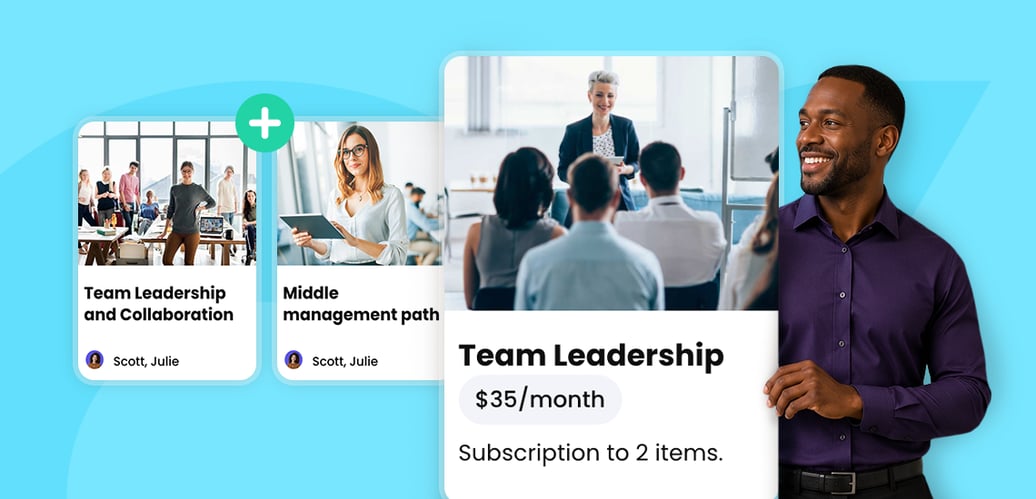
Modern LMS platforms increasingly support subscription plans that allow learners or organizations to access collections of courses, learning paths, and digital resources through monthly or yearly models.
But the most effective subscription strategies go beyond offering “all access” content libraries.
They focus on progression.
For example, a cybersecurity training company might structure subscriptions around:
- Foundational learning.
- Intermediate certifications.
- Advanced specialization.
- Ongoing compliance updates.
- Leadership development.
This creates a long-term learning ecosystem instead of a disconnected content catalog. It also gives learners a clearer sense of momentum and achievement, which improves engagement over time.
Research from Gartner continues to show that organizations increasingly prioritize learning platforms that support continuous development and measurable workforce readiness. Source: Gartner
Learning paths create long-term engagement
One of the biggest weaknesses of traditional course catalogs is that learners often do not know what to do next.
Learning paths solve this problem by organizing development into structured journeys tied to skills, certifications, or business outcomes. Instead of completing a single course and leaving, learners progress through connected experiences that build over time.
Modern learning platforms support learning paths that combine courses, assessments, certifications, and external content into sequenced development programs.
This approach creates several advantages:
- Learners stay engaged longer because they can clearly see the next step.
- Organizations gain more visibility into skill progression.
- Training providers increase customer lifetime value.
- Learning experiences feel more personalized and outcome driven.
Learning paths are especially effective for:
- Employee onboarding.
- Leadership development.
- Technical certification programs.
- Customer education.
- Compliance training.
Many platforms also support adaptive progression, allowing learners to unlock future content based on assessment results, completion milestones, or demonstrated mastery.
This creates a more personalized experience while still maintaining scalability. Source: CYPHER Learning
Lifecycle automation keeps learners connected
Long-term learning relationships require consistent engagement. The challenge is that manual communication and learner management become difficult to scale as audiences grow.
This is where lifecycle automation becomes critical. Automation allows training businesses to stay connected with learners throughout their development journey without creating excessive administrative overhead.
Modern LMS platforms support automation workflows tied to events such as:
- Course enrollment.
- Learning path progression.
- Assessment completion.
- Certification expiration.
- Inactivity.
- Subscription purchases.
For example, automation can:
- Recommend the next course after completion.
- Re-engage inactive learners.
- Send reminders before certifications expire.
- Award badges and certificates automatically.
- Trigger personalized notifications.
- Enroll learners into advanced programs.
These workflows help maintain learner momentum while creating a more connected experience. Automation also strengthens retention because learners feel guided rather than abandoned after completing a course. Source: CYPHER Learning
The future of training businesses is relationship driven
The training industry is moving away from point-in-time learning models.
As skills evolve faster and learners expect more personalized development, the businesses that succeed will be those that create continuous learning ecosystems rather than isolated learning events.
This shift requires more than simply adding subscriptions to an existing catalog.
It requires rethinking learning as an ongoing relationship built around:
- Progressive skill development.
- Structured learning journeys.
- Personalized engagement.
- Automated lifecycle support.
- Long-term learner success.
The good news is that modern learning platforms now make this far more achievable.
With learning paths, automation, subscriptions, analytics, and adaptive learning tools, training providers can build scalable lifelong learning experiences that deliver continuous value to both individuals and organizations.
Build lifelong learning relationships with CYPHER Learning
CYPHER Learning helps training businesses move beyond one-time course sales with AI-powered tools designed for continuous learner engagement.
From subscription programs and structured learning paths to lifecycle automation and personalized learning experiences, CYPHER enables organizations to create scalable learning ecosystems that keep learners progressing over time.
Whether you are training employees, customers, or partners, CYPHER Learning gives you the tools to build stronger relationships, improve retention, and deliver measurable learning impact.
Explore how CYPHER Learning can help you create modern lifelong learning experiences.
References
- Source: McKinsey - https://www.mckinsey.com/featured-insights/people-in-progress/the-ai-upskilling-challenge
- Source: CYPHER Learning - https://www.cypherlearning.com/solutions/continuing-education
- Source: Gartner - https://www.gartner.com/en/doc/726139-upskilling-in-crisis-elevate-your-skills-with-continuous-learning
- Source: CYPHER Learning - https://www.cypherlearning.com/blog/business/personalized-partner-learning-paths-for-smarter-enablement
- Source: CYPHER Learning - https://www.cypherlearning.com/tour/automation
- Source: CYPHER Learning - https://www.cypherlearning.com/solutions/training-organizations


