



For years, workplace learning followed a familiar pattern. Someone assigned a course, learners completed it, and the organization recorded another completion. While this approach remains essential for compliance, onboarding, and mandatory certifications, it no longer reflects how people develop the skills they need to perform.
Today's employees encounter new challenges every day. They need answers before a meeting, guidance during a project, or a quick way to understand an unfamiliar concept. Waiting for the next scheduled training session often means learning arrives too late.
Organizations are beginning to recognize that learning should not only be assigned. It should also be available whenever curiosity, necessity, or opportunity arises. That shift represents one of the biggest changes in learning and development today.
This is also pushing L&D toward a broader model of dynamic enablement. The goal is no longer simply to make more learning available on demand. It is to give people access to the knowledge, guidance, practice, assessment, and learning they need to perform when a need arises. Sometimes that means developing a new skill. Sometimes it means exploring a question or filling a small knowledge gap before getting back to work. Learning becomes one part of a more responsive enablement experience.
With AI-powered learning experiences like CYPHER Agent: Learn, organizations can support both structured learning programs and learner initiated growth within the same platform. Rather than replacing formal courses, AI extends them by making learning accessible exactly when it is needed. Source: CYPHER Learning; Source: McKinsey; Source: Litmos; Source: Josh Bersin
Why workers learn differently today
Knowledge has a shorter shelf life than ever before. New technologies, evolving customer expectations, and changing business priorities mean people constantly need to develop new capabilities.
At the same time, modern learners have developed different expectations. They no longer want to search through dozens of courses hoping to find the right answer. They expect personalized guidance that recognizes who they are, what they already know, and what they are trying to accomplish.
This is where self directed learning becomes far more valuable than simply giving learners unrestricted access to a large content library.
True self directed growth requires guidance.
Instead of asking learners to browse hundreds of learning objects, AI can help them identify the most relevant knowledge, organize it into manageable topics, and present it in a logical progression.
CYPHER Agent: Learn is designed around this principle. Learners simply ask what they want to learn, and the agent creates a personalized learning experience that considers their profile, previous interactions, experience level, and available knowledge resources. If organizations have connected their own knowledge base, the generated learning can also draw upon approved company content. Source: CYPHER Learning; Source: LearnExperts
From courses to conversations
Traditional learning systems are built around catalogs. Modern learners increasingly begin with a question. Instead of searching course titles, learners can ask:
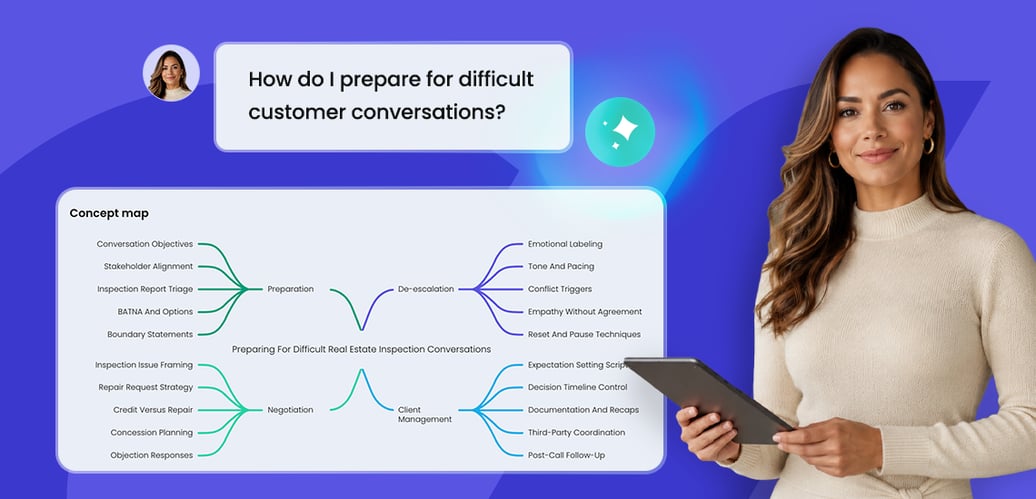
- How do I prepare for difficult customer conversations?
- Explain the latest product update.
- Help me understand financial forecasting.
- Teach me effective presentation skills.
CYPHER Agent: Learn transforms those questions into structured learning sessions instead of simply returning search results. Before generating content, it asks a few questions to understand the learner's goals and preferred focus. It can then generate an outline, allowing the learner to refine the session before learning begins.
The result feels less like browsing an LMS and more like working with a knowledgeable learning partner. This conversational experience lowers the barrier to learning. Employees spend less time deciding what to study and more time building useful knowledge.
Personalization creates momentum
Personalized learning has often meant assigning different courses to different job roles.
AI makes personalization far more dynamic.
Each learner brings different experience, confidence, and prior knowledge to a topic. Two sales managers may need completely different learning journeys even though they hold identical positions.
CYPHER Agent: Learn adapts by creating individualized learning sessions rather than delivering identical content to everyone. It can present learning through:
- A personalized lesson outline.
- An interactive concept map that connects related topics.
- A table of contents for learners who prefer a more structured path.
The concept map is particularly valuable because it helps learners understand how ideas connect. Rather than consuming isolated pieces of information, learners can explore related concepts naturally and choose the order that best matches their goals. AI Crosscheck also reviews generated responses to help improve accuracy before learners continue.
This kind of guided exploration encourages curiosity while still providing enough structure to keep learning focused.
Self directed growth becomes dynamic enablement
One of the biggest limitations of assigned learning is timing. Training may be delivered weeks or months before someone actually needs to apply the information. Self directed learning changes that dynamic by allowing people to initiate development themselves. Dynamic enablement takes it a step further by recognizing that not every moment of need requires the same response.
Before a presentation, someone might want to strengthen a skill. Before a customer meeting, they might need to understand an unfamiliar product concept. During a project, they may discover a gap in their knowledge that requires deeper exploration. At another moment, they might benefit from assessing what they already know or practicing how they would respond to a situation.
The question therefore becomes less about “What training should this employee take?” and more about “What does this person need right now to perform?”
CYPHER Agent supports this more dynamic approach by giving learners different ways to respond to a moment of need. CYPHER Agent: Learn can help someone build understanding around a topic through a personalized learning experience. CYPHER Agent: Assess can help establish what they already know and where more development may be useful, while CYPHER Agent: Practice gives learners an opportunity to apply knowledge and receive feedback.
Together, these experiences help move learning beyond a model in which development must always be assigned, scheduled, and packaged in advance. Learners can take a more active role in building capability, while organizations provide the structure, trusted knowledge, and governance that keeps development connected to business needs.
Giving learners freedom without losing control
Some organizations worry that self-directed AI learning could lead employees away from approved information. Effective AI learning platforms address this through governance rather than restriction.
With CYPHER Agent, administrators can define guardrails, determine which AI tools are available, and connect approved resources through the Agent knowledge base. Organizations can also decide which documents should be synchronized for AI generated learning while maintaining administrative oversight.
This balance allows learners to explore topics independently while keeping generated learning aligned with organizational priorities.
Self directed learning becomes both flexible and trustworthy.
The future belongs to organizations that support continuous growth
Assigned learning will always have an important place. Organizations still need onboarding, compliance training, certifications, and structured development programs. The difference is that these experiences are no longer enough on their own.
High performing organizations increasingly recognize that growth happens between formal courses, during everyday work, and in response to real challenges. People who can quickly learn, adapt, and apply new knowledge become more confident, productive, and prepared for change.
AI makes that continuous learning practical by helping every learner find relevant knowledge at exactly the right moment. Instead of waiting to be assigned their next course, learners can actively build the capabilities they need today while organizations maintain visibility, governance, and alignment with business goals.
That is the real shift taking place in workplace learning. It is not simply moving from courses to AI. It is moving from assigned learning toward continuous, self directed growth and, ultimately, dynamic enablement.
For L&D teams, that means thinking beyond what learning should be assigned and considering what people need to perform as new questions, challenges, and opportunities emerge. Formal training remains essential, but it becomes part of a broader environment where people can learn, assess, practice, and access trusted knowledge when the moment demands it.
The future of workplace learning is not simply giving people more opportunities to learn. It is giving them more ways to become capable when capability is needed.
If you're ready to create learning experiences that support employees both inside and beyond formal training, discover how CYPHER Agent: Learn helps organizations deliver personalized, in the moment learning that keeps people growing every day.
References
- Source: CYPHER Learning - https://www.cypherlearning.com/ai-360/cypher-agent-for-learners
- Source: McKinsey - https://www.mckinsey.com/capabilities/people-and-organizational-performance/our-insights/the-organization-blog/reimagine-learning-and-development-for-the-ai-age
- Source: Litmos - https://www.litmos.com/blog/articles/ai-support-self-directed-learning/
- Source: Josh Bersin - https://joshbersin.com/2026/03/the-world-of-corporate-training-lurches-toward-enablement/
- Source: CYPHER Learning - https://www.cypherlearning.com/ai-360
- Source: LearnExperts - https://learnexperts.ai/blog/linkedin-workplace-learning-report/


